

What to Check Before Buying a New Home or Lot in Dakota County
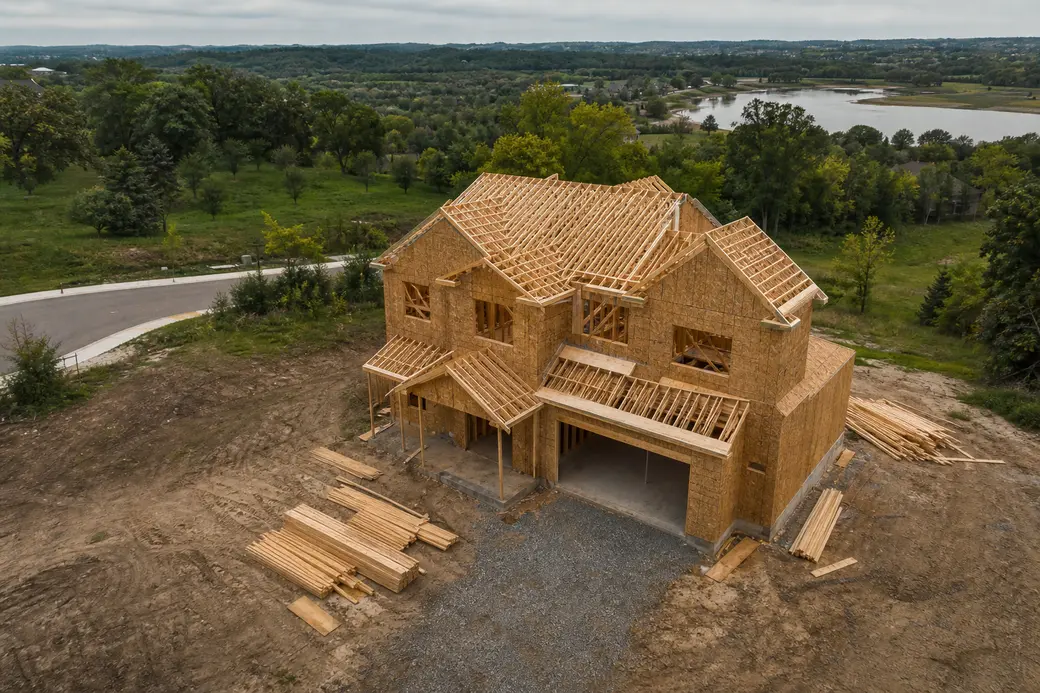
Building new homes in Dakota County requires verifying the governing jurisdiction, zoning, shoreland or floodplain exposure, and permit timelines before breaking ground. Each city and township issues its own permits, and some approvals can take 60 days or more depending on the parcel.
What do buyers need to know before building new homes in Dakota County?
Building new homes in Dakota County means navigating a permit and zoning system that varies by city and township, not by county. Every parcel needs jurisdiction-specific review, and some lots carry shoreland, floodplain, or easement restrictions that can reshape your plans entirely. Getting these answers before you buy land or sign a builder contract is the move that separates a smooth build from a costly delay.
Key Takeaways
- Dakota County does not issue standard building permits countywide, the city or township where the parcel sits issues the permit, so your first call goes to that local jurisdiction.
- Construction near public waters, wetlands, or a FEMA-designated floodplain can trigger additional county permits under Dakota County Ordinance 50, even if the city approves the build.
- Some township permits in Dakota County take up to 60 days to review, and incomplete submissions cannot be reviewed until all required materials are provided.
- Recent local market data shows the median sale price in Lakeville at $511,423 with a median of 23 days on market, new construction here competes in a fast-moving pool of existing homes.
- A government-issued building permit confirms code compliance, not workmanship quality, independent inspection hold points are a separate layer of protection buyers should build into their contract.
Why the permit picture for new homes in Dakota County is more complicated than most buyers expect
The first thing I tell every client considering new construction in this market: the county is not your permitting authority. According to Dakota County, all cities and townships within the county retain their own land-use and zoning authority, and building permits are issued by the applicable city or township. That means a lot in Lakeville goes through Lakeville's building department, a lot in Randolph Township goes through Randolph Township, and so on.
This matters more than it sounds. Each jurisdiction has its own application forms, plan-review timelines, fee schedules, and inspection processes. If you're comparing two lots and one sits inside a city limit and one sits in a township, you may be looking at meaningfully different timelines and requirements before a single shovel hits the ground.
For a deeper look at what the new construction process looks like in one of the county's most active markets, Lakeville New Construction: What Buyers Must Know walks through what buyers encounter there specifically.
Township timing is a real scheduling risk
Township parcels deserve extra attention on the calendar. Randolph Township's permitting process illustrates the pattern: certain applications are reviewed at monthly Planning Commission meetings, incomplete submissions cannot be reviewed until all required materials are in hand, and some permits can take up to 60 days to process. Inspections must be scheduled at least 24 hours in advance with the permit number, project address, and inspection type provided.
If you're building on a township parcel anywhere in Dakota County, confirm the meeting schedule, completeness requirements, and inspection sequencing before you set a construction start date or a closing deadline. A missed submission window can push your timeline by a full month or more. For a realistic picture of what a Minnesota build schedule looks like end to end, see how long it really takes to build a home in Minnesota.
Shoreland and floodplain exposure can trigger county permits on top of city or township permits
Here's where a lot of buyers get caught off guard. Even after a city or township approves your build, Dakota County can require additional permits if the parcel is near public waters or within a FEMA-designated floodplain. Under County Ordinance 50, the county's Shoreland and Floodplain Management Ordinance, a shoreland permit must be obtained before regulated activities begin. That includes not just the house footprint but grading, filling, vegetation removal, and related site work.
Ordinance 50 also authorizes county site inspections and re-inspections to verify compliance. If a field change affects shoreland or floodplain conditions, you need written confirmation from the permitting authority before proceeding. This is not the kind of thing to sort out after the foundation is poured.
The City of Burnsville's Planning and Zoning page is a good example of how individual jurisdictions handle this at the local level: they direct applicants to city zoning and flood-zone maps and offer a formal zoning-letter process for written confirmation on a specific parcel. Other Dakota County cities and townships may call the process something different, but the principle is the same. Get it in writing before you finalize plans.
Quality control during construction: what a permit does and doesn't cover
This is a point I come back to with every new construction client, and it comes directly from my background as a homebuilder. A government-issued permit and inspection confirms that the work meets the applicable building code and approved plans. It does not guarantee workmanship quality, and it does not catch every detail that matters to a buyer.
The areas I always tell clients to watch closely are the ones that get covered up: foundation waterproofing before backfill, framing before drywall, rough mechanical and electrical before insulation. Once those systems are concealed, your options narrow significantly. Building independent inspection hold points into your purchase contract, tied to construction milestones, is one of the most practical protections available to a new construction buyer.
For guidance on evaluating the builder itself before you get to this stage, How To Compare Builders in Lakeville MN covers what to look for and what questions to ask.
What to review at each stage of construction
These are the checkpoints worth building into your schedule and your contract:
- Before concrete is poured: Verify footing depth, soil conditions, and that the foundation location matches the approved site plan and setback requirements.
- Before foundation walls are backfilled: Confirm waterproofing, drainage tile, and any required inspections are complete. This is one of the most consequential and least visible stages of the entire build.
- Before framing is concealed: Review structural elements, window and door rough openings, sheathing, and flashing details.
- At rough mechanical, electrical, and plumbing: Confirm layout matches plans and that all work is inspected before insulation goes in.
- At final completion: Walk the entire home against the approved plans, the contract specifications, and your punch list. Drainage, grading, and exterior details are easy to overlook at this stage but matter for long-term performance.
Keep copies of everything: approved plans, permit cards, inspection approvals, change orders, engineering documents, grading and drainage plans, warranties, and photographs of work before it's covered. If a field change affects setbacks, drainage, or any regulated shoreland or floodplain condition, get written confirmation from the permitting authority before the work proceeds. A paper trail protects you at every stage.
Where new construction fits in the current South Metro market
New homes in Dakota County don't exist in a vacuum. They compete directly with existing inventory, and the pricing gap between new and resale varies considerably depending on the city. Here's a look at recent area-level market data across the South Metro:
| Area | Median Sale Price | Median Days on Market |
|---|---|---|
| Lakeville | $511,423 | 23 |
| Apple Valley | $380,000 | 35 |
| Burnsville | $390,000 | 34 |
| Eagan | $412,500 | 42 |
| Prior Lake | $580,000 | 29 |
| Rosemount | $396,900 | 51 |
| Inver Grove Heights | $415,000 | 49 |
| Savage | $400,000 | 52 |
Source: Recent local market data, trailing approximately 90 days as of October 2026. Area-level medians, an individual home's value varies by condition, street, build year, and timing.
These numbers matter when you're evaluating a new construction contract. In a market like Lakeville, where existing homes are moving in 23 days at a median above $511,000, a new build at a premium price point needs to pencil out against what you could buy today. That calculation depends on your lot, your builder's pricing, your timeline, and what the finished home will actually deliver. Your specific situation is worth running through with someone who knows both the construction side and the resale market here.
Read what other buyers and sellers have experienced working with me: Google Reviews for Austin Eaton.
Frequently Asked Questions
Do I need a city, township, or Dakota County permit to build a new home?
You need a permit from the city or township where the parcel is located, not from Dakota County directly. Dakota County confirms that cities and townships retain land-use and zoning authority and issue building permits for construction within their boundaries. A separate county permit may also be required if the parcel is near public waters or within a FEMA-designated floodplain under County Ordinance 50.
How do I find the zoning district for a vacant lot in Dakota County?
Contact the planning or zoning department for the city or township where the lot is located. Some jurisdictions, like Burnsville, offer a formal zoning-letter process that provides written confirmation of zoning classification for a specific parcel. Other Dakota County cities and townships have similar processes under different names, always request written confirmation rather than relying on a verbal answer.
Can I build a home on property near a lake, river, wetland, or floodplain in Dakota County?
It depends on the parcel, and you need to verify before finalizing any plans. Dakota County's Shoreland and Floodplain Management Ordinance (County Ordinance 50) requires a county permit before regulated activities begin near public waters or within FEMA-designated floodplains, and those activities include not just the house footprint but grading, filling, and vegetation removal. The county also has authority to conduct site inspections and re-inspections to verify compliance.
What should I verify before buying a vacant lot in Dakota County?
Confirm the governing jurisdiction, zoning classification, setback requirements, easements, drainage patterns, flood-zone status, and whether any shoreland or floodplain restrictions apply. Also verify access, utility availability, and whether the lot requires a septic system or has municipal sewer and water. Get written confirmation from the applicable city or township on zoning, and review the parcel against FEMA flood maps before committing.
How long does it take to obtain a building or zoning permit in a Dakota County township?
It varies by township and by application type. Randolph Township states that certain permits can take up to 60 days to review, and some land-use matters are considered only at monthly Planning Commission meetings. Incomplete submissions cannot be reviewed until all required materials are provided, so confirm exactly what the township requires before submitting and build that timeline into your construction and closing schedule.
What should I check before the foundation is backfilled on a new construction home?
Before backfill, confirm that foundation waterproofing, drainage tile, and all required inspections are complete and documented. This is one of the most consequential stages of a new build because once the foundation is backfilled, those systems are inaccessible without significant cost. An independent inspector reviewing the foundation before backfill is one of the most valuable investments a new construction buyer can make.
If you're weighing whether new construction makes sense for your situation in the South Metro, I'm happy to walk through it with you. Schedule a consultation and we'll look at the lot, the builder, and the numbers together.
Equal Housing Opportunity. Austin Eaton is licensed in Minnesota, regulated by the Minnesota Department of Commerce. This article is general information only and is not legal, tax, or financial advice. Confirm your specific permit requirements, costs, and timelines with the applicable city or township, your title company, tax advisor, or lender.
Categories
Recent Posts
GET MORE INFORMATION